We went by train the next morning via Aveiro Line to Porto, and since we already have our tickets from the day before, we only had to wait for the train.


Porto (also known as Oporto) is a vibrant city and has a rich cultural offering. It is the second major urban area in Portugal. The nightlife is very alive (as I've heard) and there are numerous concerts and parties. You can always check out on their website. For those who want it easy, you can visit Porto and hit an exciting neighbourhood in one day. But of course if one wants to see a whole lot more, it's advisable to stay a few more days.


Porto (also known as Oporto) is a vibrant city and has a rich cultural offering. It is the second major urban area in Portugal. The nightlife is very alive (as I've heard) and there are numerous concerts and parties. You can always check out on their website. For those who want it easy, you can visit Porto and hit an exciting neighbourhood in one day. But of course if one wants to see a whole lot more, it's advisable to stay a few more days.
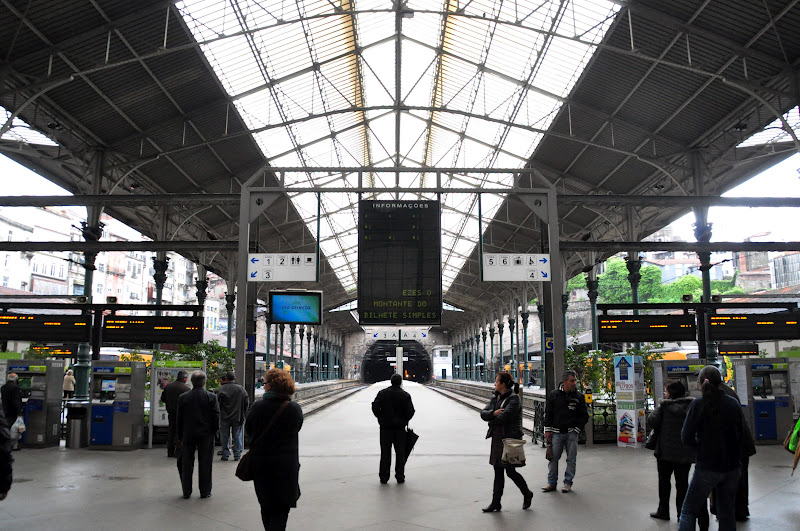
We arrived at Estação São Bento (São Bento Station) and started our sightseeing. The station itself is already an architectural gem. The building was designed with a touch of French Renaissance. We first went to a nearby tourist office where we got a good city map and tips for a tour. Then we made a trip to the subway going to Casa da Música, a major concert hall and houses the cultural institution with the same name. For an architecture enthusiast like myself, it is a must see place. The place is open for guided tours. We were there and unfortunately had to wait for the next couple of hours for the following guided tour inside, so we decided to just go around and took some pictures.



We went back to the subway to São Bento, the original starting point of the tour. From there, we climb up to the Sé do Porto (Porto Cathedral) in which we could barely get in and already whisked away since they are closing. So we didn't really see anything inside the church. But in front of the cathedral is a fantastic panorama of the city and the Douro river. Then we were off to see the main attraction of Porto, the bridges. But before, we went to the Funicular dos Guindais, a cable car from Batalha station going down the steep hill, the Ribeira station, which is on the foot of the bridge, Ponte Dom Luis I.



We went back to the subway to São Bento, the original starting point of the tour. From there, we climb up to the Sé do Porto (Porto Cathedral) in which we could barely get in and already whisked away since they are closing. So we didn't really see anything inside the church. But in front of the cathedral is a fantastic panorama of the city and the Douro river. Then we were off to see the main attraction of Porto, the bridges. But before, we went to the Funicular dos Guindais, a cable car from Batalha station going down the steep hill, the Ribeira station, which is on the foot of the bridge, Ponte Dom Luis I.


Although the trip with this funicular was somewhat unique, there was hardly anyone there, saved for a Russian couple. This was perhaps because of the unattractive entrance when you come to a city wall, then down a flight of stairs. It didn't cost us extra since we already had our day pass for all the public transport. We weren't so sure at first how to go about since we were the only people in there. There was an indicator which shows a number 26, and we thought that the cable car is only available in 26 minutes. We wanted to ask the man behind the counter but was too busy talking on the phone. Suddenly there came a signal (a blinking yellow light), and the thing just drove off without us. Then we waited for the next empty wagon, got in and drove down the steep hill. I was supposed to meet up with my friend Margo who is also there for a visit and have been texting our whereabouts. Funny though because I didn't see the people inside the incoming wagon and she texted me that she just saw us in the car going down.


Below, we were right at the foot of Ponte Dom Luis I and the nearby Ponte Maria Pia. Ponte Maria Pia was engineered by Gustave Eiffel in 1877, the same Eiffel who built the famous Eiffel Tower in Paris, whereby the Ponte Dom Luis I was a sole responsibility of Téophile Seyrig. We walked on the bridge towards Vila Nova de Gaia, which is actually a separate city. Vila Nova de Gaia already existed during the Roman empire. It is also well known for its "lodges" (locally known as caves) where the world-famous Port wine is stored and aged. The lodges become a primary tourist magnet. We were already approached a lot to visit the wine cellars. I would have loved to, but due to our time constraints, we decided to just go about. We wanted to take a boat tour, so we asked for tickets at one of many tour vendors on the river. It was still half an hour to wait, so we had time to have a little break at the cafe nearby.


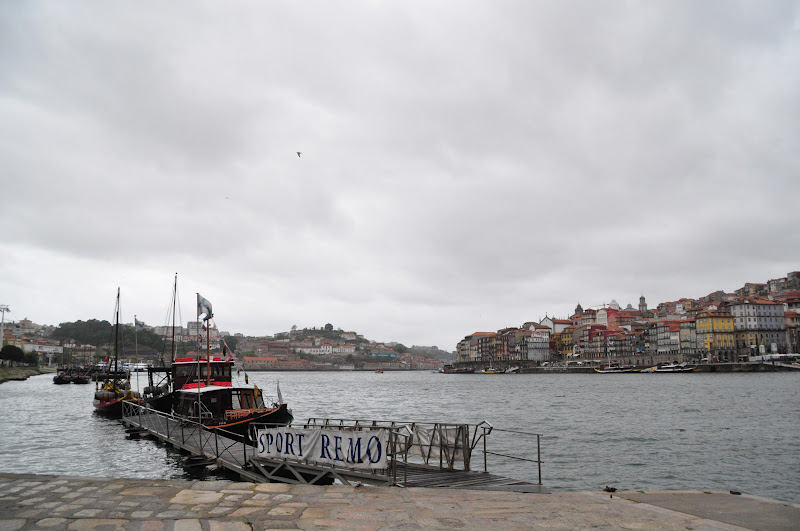


On the boat, we were together with a load of elderly tourists who were travelling as a group, and we first had to wait for them until we could take off. Despite the rainy and cold weather, it was a fantastic tour through the numerous bridges and past the "Mosteiro da Serra do Pilar", which is also a part of the World Heritage Site of Porto. Unfortunately, the monastery is off limits to tourists.


Going back to Porto, we wanted to cross the bridge but this time on the top. You can take a cable car in Vila Nova de Gaia going up the hill. The view on top is fantastic. We come up to the next tram stop and then cross the bridge riding the tram. Passing by the "Praça da Liberdade" and the church "Igreja dos Clerigos" with its imposing tower, we went to the "Centro Português de Fotografia". There was an exhibit of press photography about Afghanistan.


