Navigation Pages

| HOME | SHOP | TRAVEL | FASHION |

Showing posts with label calauit. Show all posts

Tuesday, August 16, 2011

Busuanga: Suffering Safari-ing Calauit


Giraffes in the Philippines a dictator's legacy

CALAUIT ISLAND, Philippines (AFP) - With a taste for tropical fruit and a reputation as thieves, a herd of giraffes on a remote Philippine island is one of late dictator Ferdinand Marcos's most intriguing legacies.

The 20 giraffes, along with dozens of zebra and antelope, are descendants of a boatload of animals imported from Africa in the 1970s - supposedly in a Noah's Ark-style effort to save them from extinction.

They were brought to tiny Calauit Island, where under a Marcos decree the locals were moved elsewhere to make way for the strange new inhabitants and bamboo forests were cleared so the lowlands resembled the savannahs of Kenya.

Today just over 100 African animals - roughly the same number as the original batch - roam the island.
____
Calauit Island situated in north western coast of Palawan, Philippines. It declared as a wildlife sanctuary and game preserve in 1977.[1]
The wild animals were imported from Africa in 1970s to save them from extinction. The imported animals include 20 giraffes, dozens of zebra and antelopes. Philippines President Ferdinand Marcos ordered the locals to move other places and then he ordered to clear the bamboo forests to make the place similar to the savannahs of Kenya. Today, the African animals still roaming around the island and the number of animals is roughly the same as the original number.[2]

My recollection of Calauit was during my college days. Everything is still vivid in my memories. In 1993 during our field biology class, the ten of us students, our Professor and her daughter, which was still in high school, braved the sea on a small boat to make our field trip at Calauit Island in Busuanga in northern Palawan. There was no flight to the island back in the day. The only way to get there is to ride a bus or jeepney to Taytay or El Nido. The bus ride from Puerto Princesa to Taytay was already a challenge back then. We stayed overnight in Taytay at the PSU Campus. It was already a challenge for young people like us to travel far north. It was an adventure, a whole lot different experience. Not much for me because I was raised in Araceli, another small island town in northern Palawan. I have experienced travelling on a boat on rough seas.

The next day, we had to take a tricycle to bring us to "Embarcadero", northwest of Taytay to get into our boat. Our banca, an outrigger boat, was perhaps a little bit bigger than the size of a regular boat. Our next stop was in Liminangcong, in El Nido town, which is already a couple of hours ride. We traversed the western Palawan sea on huge and sometimes converging waves. We had to cover ourselves with tarpaulin to keep us and our belonging from getting drenched. I believe almost everyone had been praying for dear life. You can't even see any shimmer of light or an island nearby, and that was a real horror for us all, but it looked like our boatmen were used to such weather. We passed by the Linapacan municipality, and it was already dawn when we reached another island, I think it was called Dicabaitot. Then we had another stop in Panlaitan somewhere in the municipality of Culion where we're able to cook our food and had to get some provisions. After over 24 hours on the rough sea and no proper meal or sleep, we finally arrived in Calauit island.


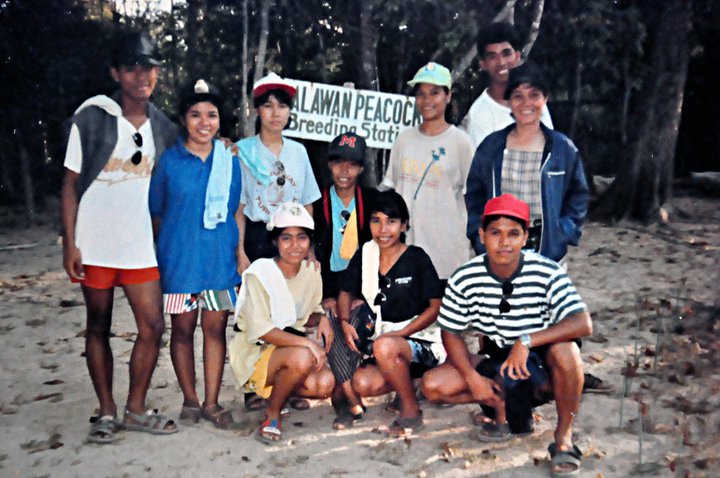
 to be continued...

Busuanga: Calauit Wildlife Sanctuary

Day 19: Coron (Busuanga)

We woke up at 3:00 a.m., fixed ourselves and we were then picked up at 4:00 by our guide at the hotel in Coron and took a short ride to the pier where our boat was waiting. I decided to pick up some bread and drank a cup of coffee at an eatery nearby. It took a few minutes and companion was already annoyed. Well, I needed something warm in my stomach, or else hell will break loose in there, and I won’t be enjoying the trip to Calauit. At first, the boatman wanted 7,000 pesos for the round-trip, but after some haggling, he agreed for 6,000 pesos since we were the only two passengers.  We tried to hire the boat for ourselves, so we’re free to decide on how long to stay. Otherwise, it’s always going to have a lot of waiting and a lot of drama just like our experience at Honda Bay in Puerto Princesa.

I was still feeling sluggish and decided to snooze in the boat. The ride takes about 3 hours. The landscape was still dark and exudes the aura of a mystic. It was a dreamscape, and it was one of the times I really felt at peace. Maybe because of the silence and the only sound you hear was coming from the motor of the boat. Then slowly the sun slowly came up. The low-lying mist blankets the landscape. It was splendid.


We arrived at around half past seven and immediately went to the reception, paid another 1,600 pesos for two people (300 pesos entrance fee and 1000 for the truck). The toilet has no flush, only buckets of water which is a dread for many guests. Nevertheless, it was serviceable.


You can also rent a van to Salvacion then a shorter boat ride to Calauit Island. The van cost around 7,000-8000 pesos. Initially, we wanted to go on a group tour which cost 2600 per person, and that includes the van ride and island transfer. With that enormous amount of fee, it would have been great if it included a meal or at least a coffee.

We were brought to the station, and with a small introduction from Rolly about the Calauit Wildlife Sanctuary we drove off through the park. The whole track was not much. We first went to feed the Giraffes. It was early enough, so most of the animals are still in the shade feeding. We were the only visitors on the island at the time. If we came a bit later, we probably haven’t been able to get close to the animals as they will be everywhere in the savannah. Some groups perhaps came then.


There were zebras and Calamian deer feeding nearby, but I was missing the topis, impalas and Elend antelopes that were originally there. I was told they have died and some are killed by the Balik-Calauit movement, a group of original settlers in the island who were resettled during the Marcos era to give way to this setting of the sanctuary. After a few photos, we drove on to a small enclosure to see the porcupines, a land turtle, monkeys, a wildcat, and a warthog.


The guide told us that they put those animals in the enclosure for a maximum of three months and then released them in the wilds again then take in other animals. That is to not disrupt them much from their natural habitats and also to guarantee the tourists to see the animals at just one place. Next, we went to the crocodile enclosure which is somewhat disappointing since it is small and cramped. On our way back we’ve seen a bayawak, a monitor lizard roaming around freely. The whole island tour took us approximately 1.5 hours and another 3 hours with the boat back to Coron town. (The group tours always go from 8:00-17:00).


My recollection of Calauit was during my college days with my classmates on our trip to the north of Palawan.